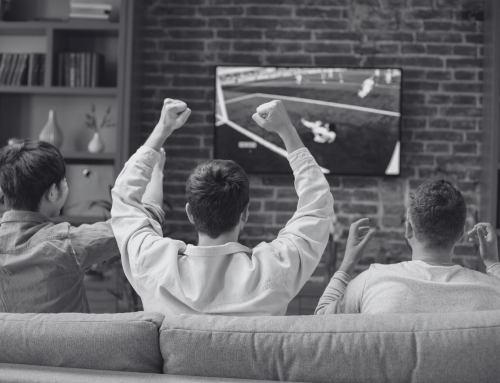
Free time is personal. It’s where people decompress, reconnect with themselves and, in many ways, reveal who they are outside the demands of work, study and family life. When we look at how South Africans in different age groups actually spend their leisure time, patterns begin to form, not just in what people do, but in why they do it. Using YouGov Profiles+ South Africa data for adults aged 18 to 24, 25 to 34 and 35 to 44, we get a clear, grounded picture of how leisure choices evolve as life stages change.
What becomes immediately obvious is that while everyone enjoys similar things, the emphasis shifts with age. Younger adults explore, experiment and express themselves through their hobbies. People in their late twenties and early thirties add more structure and routine to their free time, and adults in their mid-thirties and early forties start prioritising comfort, balance and meaningful experiences. The behaviours overlap — but the motivations mature.
Screens, music and the way we unwind
Audio is the quiet hero of leisure across all ages. Among 18–24s, 73% say they couldn’t get through the day without listening to music. The number stays high — around 71% — among 25–34s, and remains strong at 72% among 35–44s. Music isn’t merely a background element; it’s emotional regulation, mood-setting and sensory comfort all in one.
This sentiment becomes even clearer when you look at the statement “listening to music is better than thinking.” A full 78% of 25–34s agree with that, and the younger group isn’t far behind. Music doesn’t just soundtrack free time — it shapes the emotional tone of it.
Scrolling habits add another layer. Among 18–24s, around 68% say they often scroll aimlessly on social media. The 25–34 group scrolls even more, at 70%, the 35–44 group sits at 72%, while the 45+ group drops to the high 50s. It’s still high, but the behaviour becomes more moderate with age. Younger adults actively use scrolling as a decompression mechanism. Older adults treat it more as a momentary distraction.
Radio also continues to play a role across all age groups, with its relevance strengthening as people get older. While 25–34s show the lowest engagement at 69%, radio listening increases among older adults, rising to 76% among 35–44s and 78% among those aged 45 and older. This progression highlights how audio remains a constant companion through different life stages, even as platforms and listening habits evolve.
How hobbies shift as people move through early adulthood
Across every age group, cooking consistently ranks as the most popular leisure activity, cutting across life stages. Around 54% of 18–24s enjoy cooking in their spare time, and this climbs to 62% among 25–34s before settling at 59% in the 35–44 group. Food remains a universal creative outlet, but the intention behind it shifts — younger adults cook to experiment, while older adults start to cook for entertaining or family moments.
Across every age group, cooking consistently ranks as one of the most popular leisure activities, cutting across life stages. Around 54% of 18–24s enjoy cooking in their spare time, rising to 62% among 25–34s and remaining strong at 59% among those aged 45 and older. In this older group, cooking sits broadly on par with watching television, highlighting a shift toward more home-centred leisure. Food remains a universal creative outlet, but the intention behind it evolves; younger adults cook to experiment, while older adults increasingly cook for entertaining or family moments.
Movement follows a similar curve. Younger people show the strongest appetite for exercise, but the difference isn’t massive. Roughly 39% of 18–24s enjoy indoor exercise, compared with 41% of 25–34s and 36% of 35–44s. Outdoor exercise, such as running and cycling, sits at around a third for younger groups, but slightly less for people over 35. The desire to stay active is still there; it’s just more influenced by day-to-day responsibilities.
Digital hobbies tell a more generational story. Online entertainment — whether that’s YouTube, online debates or digital fandoms — attracts 49% of 18–24s, 44% of 25–34s and 40% among 45+% Interest in activities such as computer programming is strongest among the youngest group at 25%, then levels off at around 23% from the late twenties/early thirties, through to the late thirties/mid-forties. These differences aren’t just behavioural, they shape how people discover content, interact with brands and adopt new experiences.
These differences aren’t just behavioural; they shape how people discover content, interact with brands and adopt new experiences, with engagement dropping sharply among the 45+ group to just 11%.
Creative self-expression is also strongest in younger adults. More than half of 18–24s say they enjoy performing arts (acting, dancing), roughly a third enjoy singing or making art and crafts, and a similar share love photographing, writing or crafting. The energy is exploratory and expressive. By the mid-thirties, creativity hasn’t disappeared — around a quarter to a third still enjoy crafts, photography and creative hobbies — but it becomes something people fit around cinematheir routines, not something that defines them.
Creative self-expression is strongest among younger adults. More than half of 18–24s say they enjoy performing arts such as acting or dancing, while a meaningful share also engage in singing, visual art, photography and other creative pursuits. The energy at this stage is exploratory and expressive. By the mid-thirties, creativity remains part of leisure time, but participation becomes more selective and structured, fitting around daily routines rather than defining how free time is spent.
Where people go when they go out
Preferences for leisure destinations tell an equally interesting story. Younger adults enjoy a wide mix of cultural and social outings. Among 18–24s, around 54% like going to the cinema, 47% visit malls and clothing stores, and 40% enjoy restaurants and cafés. What stands out is their interest in cultural spaces, particularly art galleries: 45% of 18–24s visit galleries, which is noticeably higher than the national average.
The 25–34 group doesn’t lose that energy; they actually lean into it more. Cinema visits rise to 57%, mall visits hit 50%, and restaurants remain strong at 47%. Their higher engagement with parks and gardens, museums, art galleries, sporting events and zoos may also reflect life-stage shifts, with family outings and child-friendly occasions increasingly shaping leisure choices. This points to a blend of social activity with experiences that feel enriching, meaningful and practical, including time spent in parks, cultural spaces and, for 35%, places of worship.
By contrast, the 35–44 group still goes out, but the rhythm becomes more selective. Overall agreement around going out for drinks remains strong at 66%, broadly in line with the 25–34 group, but time is increasingly balanced with restaurants, parks, cultural spaces and at-home gatherings. Rather than stepping away from leisure, this age group appears to be curating their social time more intentionally around comfort, balance and context.
By contrast, the 35–44 group still engages actively with out-of-home leisure, but their preferences become more selective. When asked which places or events they like to visit in their free time, this group shows strong interest in restaurants, parks and gardens, cultural spaces and at-home social occasions, alongside continued participation in going out for drinks. Rather than stepping away from leisure, they appear to be curating their social time more intentionally around comfort, balance and context.
Across all ages, the home becomes a more important social space as people get older. While younger adults continue to enjoy bars and nightclubs, a majority across all three age groups say they enjoy entertaining at home, with enthusiasm particularly strong among the 35–44 group at 74%. This shift may reflect not only changing life-stage responsibilities, but also practical considerations such as the rising cost of going out and increased sensitivity to personal safety. As a result, the social centre of gravity moves from public to private spaces.
Relaxing vs being active: a tension everyone feels
Across all three age groups, people say they value both rest and movement — even when those goals compete with each other.
Among 18–24s, 81% say they like spending their leisure time relaxing, and 80% say they enjoy being active, while 79% feel it’s important to be physically active. The numbers in the 25–34 group are almost on par. By the time people reach 35–44, relaxing becomes even more important, but physical activity still remains a meaningful part of free time.
Even holidays reflect this duality. Roughly 73% of 18–24s say they want holidays where they can “eat, drink and lie in the sun”, but almost exactly the same share say they want holidays with physical activity built in. Younger adults don’t see relaxation and movement as opposites. They see them as two halves of an ideal break.
Older adults share the sentiment, just slightly toned down. People in their mid-thirties and early forties still enjoy active holidays, but they’re more likely than younger adults to disconnect from technology. Among 18–24s, only 39% say technology distracts them from enjoying a holiday; for 35–44s, the percentages increase. For them, a holiday is a time to switch off completely.
Across all three age groups, people say they value both rest and movement — even when those goals compete with each other. Among 18–24s, 81% say they like spending their leisure time relaxing, while 80% say they enjoy being active and 79% feel it’s important to be physically active. The figures for the 25–34 group remain closely aligned. By the time people reach 35–44, relaxation becomes more important, but physical activity still remains a meaningful part of free time.
Even holidays reflect this duality. Roughly 73% of 18–24s say they want holidays where they can “eat, drink and lie in the sun,” but almost the same share say they want holidays with physical activity built in. Younger adults don’t see relaxation and movement as opposites; they see them as complementary parts of an ideal break.
As age increases, however, the balance begins to shift more clearly toward rest and disconnection. People in their mid-thirties and early forties still enjoy active holidays, but they are increasingly motivated by the desire to switch off from technology. While 39% of 18–24s say technology distracts them from enjoying a holiday, this concern rises with age — dropping to just 25% among those aged 45 and older. This highlights how the meaning of “relaxation” evolves over time, from balancing activity and rest to prioritising mental space and true disconnection.
Puzzles, play and mental stimulation
One of the most unexpectedly consistent themes across all age groups is the desire for mental engagement, which strengthens rather than fades with age. While around 71–72% of 18–24s associate puzzles and games with a sense of accomplishment and mental challenge, this rises to 80% among 25–34s and remains high at 82% among 35–44s. This upward shift suggests that mentally stimulating activities become increasingly valued as part of leisure time in later life stages.
So while gaming is often assumed to be about escapism, the data points toward a deeper motivation: people want low-pressure achievement moments. They want to feel smart, successful or absorbed, even in their downtime.
This becomes a valuable insight for brands designing experiences — gamified learning, reward loops, quizzes, interactive content and even loyalty mechanics all tap naturally into this preference.
So what does all of this mean for brands?
Across all three age groups, free time is not just a by-product of life. It is something people protect. Younger adults fill it with creativity, exploration and digital immersion. People in their late twenties and early thirties invest in a mix of cultural outings, fitness, socialising and at-home hobbies. Adults in their mid-thirties to forties lean into comfort, stability and meaningful experiences that fit the rhythm of daily life.
The opportunity lies in meeting each group where they already are:
- Younger adults respond to experiences that feel expressive, shareable and exploratory.
- Adults in their late twenties and early thirties balance socialising with self-improvement, so brands that help them “upgrade” their free time naturally resonate.
- Mid-adult consumers prefer leisure that feels restorative, convenient and deeply enjoyable — without adding friction or noise.
If brands want to show up meaningfully, they need to respect the emotional weight free time carries. Leisure is not the leftover part of the day; it’s the part people look forward to. And the closer brands align to the way each age group defines “enjoyment,” the more naturally they’ll fit into the lives of South African consumers.
Methodology
YouGov Profiles+ 30 November 2025
Nationally representative sample n=24911