Based on exclusive YouGov Profiles+ data accessed through KLA, the only authorised YouGov partner in sub-Saharan Africa.
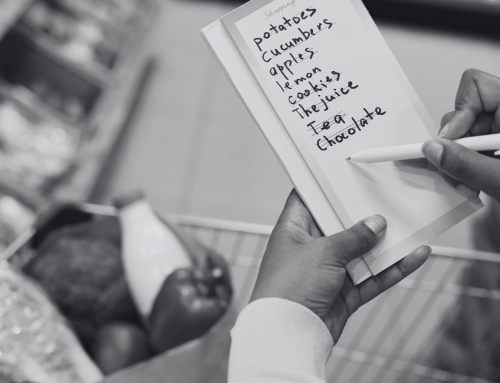
According to YouGov Profiles+ data, 70% of South African adults say they always shop with a list, making it the norm rather than the exception across the country’s supermarket aisles. On the surface, this tells a straightforward story of organised, deliberate consumers. But the far more revealing finding sits just beneath that figure, and it fundamentally changes what that statistic actually means for anyone trying to understand, or influence, how South Africans spend.
Among those same list-carrying shoppers, 62% say that each time they go to a supermarket they end up buying things they were not intending to purchase. That is not a rounding error or an occasional slip; it is the majority of the country’s most organised grocery shoppers admitting that their list does not determine their basket. Compared to the broader adult population, where 56% report the same behaviour, list users are actually more likely than average to make unplanned purchases. The conclusion the data points to is a nuanced but important one: a shopping list provides structure to a grocery trip, but it does not insulate a shopper from impulse. If anything, the discipline of having a list may coexist quite comfortably with the openness to be influenced at the point of sale.
The Profile Behind the Planned Shopper
Understanding who list users are adds important texture to this picture. They are concentrated in the 25 to 44 age band, are equally split between men and women, and are more likely than average to hold a bachelor’s degree, with 42% having completed one compared to 37% of the national online adult population. Crucially, list-led shopping cuts cleanly across all income groups rather than being concentrated among either budget-stretched or affluent households, which tells us that this is a behavioural tendency rather than a financial one. People with all levels of disposable income are equally likely to rely on a list, which makes list users a broad and commercially significant audience rather than a niche segment.
Their role within the household reinforces this significance. Around 59% of list users are the sole grocery decision-maker in their home, with 38% sharing that responsibility. These are not passive shoppers filling a trolley on someone else’s instructions, they are the primary purchasing authority for their household, and they shop widely, typically spreading their spend across multiple chains including Checkers, Pick n Pay, Shoprite, Clicks, Spar, Woolworths and Food Lovers Market. Where list reliance is highest reveals an additional layer of insight: shoppers at bulk and hypermarket retailers like Game (94%) and Makro (85%) show the strongest list usage, suggesting that the bigger and more considered the shop, the more structure people bring to it. At the other end, shoppers doing a daily shop at convenience-oriented retailers are less likely to rely on a list. This is consistent with the idea that proximity and immediacy drive those visits rather than planning.
The Impulse Buyer Is Not Who You Think
The data on those who frequently make unplanned supermarket purchases challenges a common assumption about who impulse buyers are. Rather than being lower-income, less educated or less financially engaged, South African supermarket impulse buyers are if anything slightly more affluent and more educated than the average adult. They are more likely to be in the higher income band (27% versus 21% nationally), more likely to hold a bachelor’s degree (40% versus 37%), and slightly more concentrated in Gauteng than the national average. They are broadly representative of the SA population, with no dramatic skew in either direction.
What makes this group particularly interesting for brands is the attitudinal profile that sits behind the behaviour. Among supermarket impulse buyers, 45% strongly agree that they are usually looking for the lowest prices when they shop, a figure that sits meaningfully above the national average of 38%. At the same time, 58% strongly agree that they do not mind paying extra for good quality products, again above the national average of 51%. These are not reckless or inattentive spenders. They are highly engaged, value-literate shoppers who arrive at the shelf with strong price awareness and a genuine willingness to trade up when quality is evident. The unplanned purchase is not careless, it is responsive.
The Smart Value Paradox
Across both list users and impulse buyers, a consistent attitudinal pattern emerges that has significant implications for how brands position themselves. These shoppers are simultaneously price-conscious and quality-oriented, loyalty-programme engaged and promotion-driven, digitally open and still largely offline for their actual grocery purchases. Among list users specifically, 80% say they are usually looking for the lowest prices when they shop, and 87% say they always make sure they use sales, coupons and deals. Yet 88% say they do not mind paying extra for good quality products, and 91% say they prefer brands that are sustainable. This is not contradiction, it is a coherent value framework in which the best outcome is quality at a price that feels justified, and the worst outcome is paying over the odds for something ordinary.
This mindset also extends to loyalty. Among list users, 91% believe loyalty programmes are a great way for brands to reward customers, 85% subscribe whenever they are given the opportunity, and 81% say they spend more with brands when they are members of their programme. Loyalty is not a passive benefit for this audience, it is something they actively seek out and respond to, and it represents one of the clearest mechanisms through which a brand can convert a planned purchase into a deepened relationship.
What This Means for Brands
The strategic implication of this data is that South African grocery shoppers are not a choice between planned and impulsive, loyal and price-driven, or premium and value-seeking. They are all of these things simultaneously, and the brands that perform best in this environment will be the ones that are designed for both sides of the shopper at once.
Winning on the list is the starting point, not the finish line. If a shopper has written your product down before they leave the house, that is a powerful signal of intent and trust. But the data makes clear that the aisle itself is a second moment of decision, and that planned shoppers are genuinely open to influence at that point, particularly when a promotion, a quality signal or a deal makes the upgrade feel like a smart rather than indulgent choice. Brands that are present and persuasive at both moments, the list-writing stage and the shelf, have a structural advantage.
Loyalty programmes are not a retention mechanic for this audience; they are a growth one. Given the high rates of loyalty participation, deal-seeking and willingness to pay more for quality among both list users and impulse buyers, a well-structured programme that rewards planning while also triggering in-the-moment upgrades aligns precisely with how these shoppers already think. The opportunity is to make the better choice feel like the obvious one, not a compromise between price and quality, but the point where both converge.
Methodology
Data sourced from YouGov Profiles+ South Africa. YouGov Profiles is a segmentation and media planning tool. With data collected daily, it provides a comprehensive view of consumers’ worlds. KLA is the exclusive authorised YouGov partner in sub-Saharan Africa.
Dataset: Shopping behaviour and retail attitudes variables.
Target group: South African adults, internet users 18+ (n = 550 for shopping list question; n = 398 for list-user filter; n = 321 for supermarket impulse buyer filter).
All agreement figures reflect combined tend to agree and definitely agree responses unless otherwise stated.